

Please Leave Us A Message
Privacy statement: Your privacy is very important to Us. Our company promises not to disclose your personal information to any external company with out your explicit permission.

Most teams discover this at verification review — when the assembled loop's PFD misses its target threefold and the "SIL 3" stamp means nothing alone. Fixing it at specification stage is cheap; after the valve is on the pipeline is not.
Because SIL is assigned to a Safety Instrumented Function (SIF), not to a component. A SIF is one complete trip loop: the sensor that detects the hazardous condition, the logic solver that decides, and the final element — the valve, actuator and solenoid — that moves the process to a safe state. So when engineers ask does SIL certification apply to actuator or whole loop, the answer is unambiguous: the whole loop. IEC 61511 assigns a target SIL to that function based on the risk reduction the hazard needs. No part of the loop "is" SIL 3 in isolation.
The numbers make it concrete. SIL is a band of average probability of failure on demand (PFDavg):
| SIL | PFDavg (low demand) | Risk reduction factor | Typical proof-test interval |
| SIL 1 | 0.1 – 0.01 | 10 – 100 | 1 – 5 years |
| SIL 2 | 0.01 – 0.001 | 100 – 1,000 | 1 – 2 years |
| SIL 3 | 0.001 – 0.0001 | 1,000 – 10,000 | 6 – 12 months |
That target is divided among the sensor, logic solver and final element. The final element — your valve and actuator — usually consumes the largest share of the PFD budget, because it sits motionless for years and must still move on demand. A "SIL 2 transmitter" paired with a poorly maintained valve does not deliver a SIL 2 function. The chain is only as strong as its weakest link, and the actuator is often that link.
What does an IEC 61508 certificate on an actuator actually say? It says the device was assessed as suitable for use in a SIF up to a stated SIL, and gives you the data — failure rates, safe failure fraction, systematic capability — to plug into the loop calculation. That is essential evidence, but it is not a guarantee your loop achieves SIL 3. This is exactly why is SIL rated valve a marketing claim in most supplier brochures: the component certificate is real, but the conclusion drawn from it is not.
Two more reasons a single box cannot carry the number:
✅ Bottom line: SIL is a property of the complete trip loop, never the actuator alone; a supplier can certify a device as suitable for use in a loop, not make the loop compliant by itself.
Ask for four things by name — failure-rate data, an FMEDA, a systematic-capability statement, and a clearly scoped certificate. If a supplier cannot produce all four, "SIL 3" is a marketing line, not a substantiated claim. Understanding what does SIL 3 mean for ESD valve final element starts with these inputs, which your functional-safety engineer needs to calculate achieved PFD and confirm the architecture constraint.
A fifth question matters: what proof-test interval does the calculation assume? PFDavg is roughly λDU × interval ÷ 2 — double the interval, double the risk. A supplier quoting SIL 3 PFD that assumes quarterly testing while your plant tests annually has handed you a number you cannot achieve. Partial stroke testing helps: quarterly PST on a spring-return element is credited with raising diagnostic coverage from 0% to about 60%, nearly halving PFDavg — but only if results are logged and the credit justified for your valve.
As a China-based manufacturer, Rizhao Deyi Intelligent Instrument Co., Ltd. takes the view that these documents belong in the quotation package, not a drawer. When we quote an ESD duty for DY electro-hydraulic actuators, we state certification scope per model — including, plainly, where the answer is "suitable for use in a SIL 2 loop" rather than the SIL 3 a buyer hoped for. A supplier willing to name the lower number is usually the one whose higher number you can trust.
✅ Bottom line: Demand λDU data, an FMEDA, a systematic-capability statement and a model-scoped certificate; a PFD number without its assumed proof-test interval is not something you can operate on.
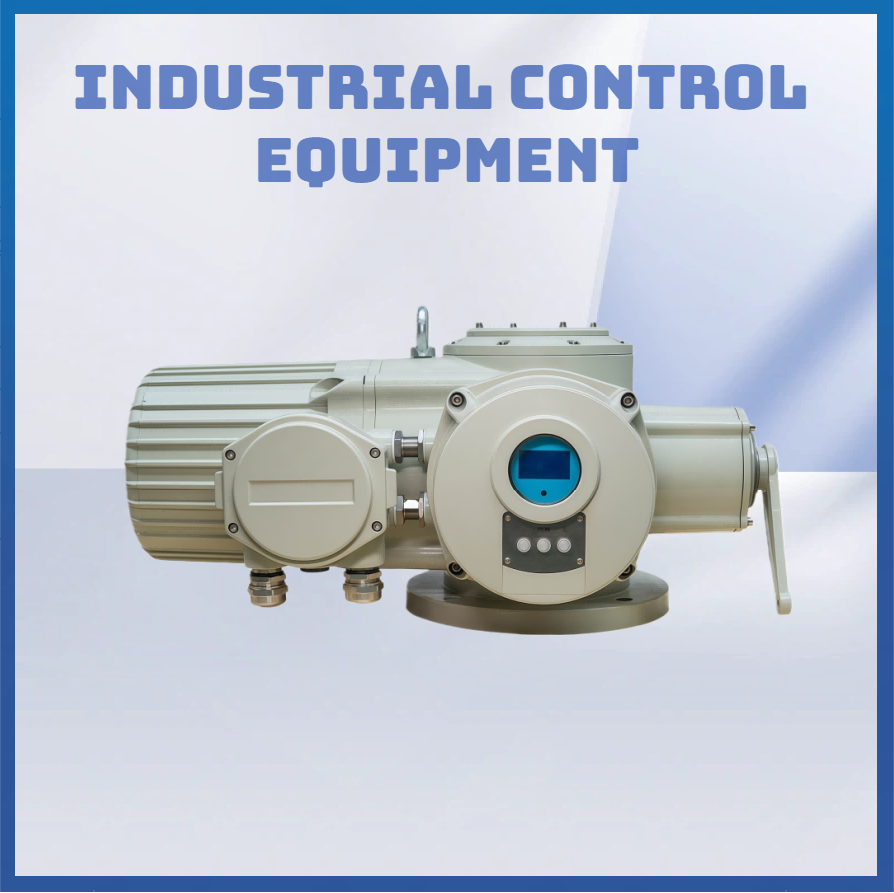
Q: Why is SIL rated valve a marketing claim rather than a real rating? A: Because SIL applies to the complete safety function, not a part. An actuator can be certified suitable for use in a SIL 3 loop, with data to prove it; the SIL itself must be verified for the installed loop — sensor, logic solver, final element and proof-test regime together.
Q: Does SIL certification apply to actuator or whole loop? A: The whole loop. DY can document a device's suitability and failure rates, but only a loop verification including the valve and actuator delivers a SIL target. A single "SIL 3" component never makes a SIL 3 function.
Q: What does SIL 3 mean for ESD valve final element in practice? A: The final element must fit a loop achieving PFDavg of 0.001–0.0001, which normally requires redundant architecture such as 1oo2 and a shorter proof-test interval — not simply a better actuator on a single valve. For DY EHA units, that means quoting the real certified scope rather than a hoped-for number.
Send your SIF description — hazard, required SIL, valve type, fail action and proof-test strategy — to DY. We will return a document set for the matching Electro-hydraulic Actuator: λDU data, FMEDA summary, systematic-capability statement and exact certified model scope, plus a written note on where the actuator is not sufficient alone. Rizhao Deyi Intelligent Instrument Co., Ltd. offers OEM/ODM builds and states certification scope per model in the quotation, so your verification review starts with facts, not brochure lines.
|
|
|
| Published: November 2026 | By DY Engineering Team |

November 17, 2026
Email to this supplier
November 17, 2026
Privacy statement: Your privacy is very important to Us. Our company promises not to disclose your personal information to any external company with out your explicit permission.
Fill in more information so that we can get in touch with you faster
Privacy statement: Your privacy is very important to Us. Our company promises not to disclose your personal information to any external company with out your explicit permission.