

Please Leave Us A Message
Privacy statement: Your privacy is very important to Us. Our company promises not to disclose your personal information to any external company with out your explicit permission.

The two letters that matter most on that line are "db", not "IIC" — and a tag that still reads "Ex d" is showing you a marking system superseded in 2009. Everything else on the plate follows from getting that first element right.
The nameplate is the only part of the documentation that reaches the plant floor. Drawings get filed, certificates go into a dossier, and at 2 a.m. an electrician reads eight characters on a metal tag. If they do not match the area classification drawing, the actuator does not get energised, and no purchase-order conversation survives that.
It describes a flameproof enclosure at protection level b, for the most severe gas group, limited to a 135°C surface, approved for Zone 1. Five decisions are compressed into eight characters, which is why reading what does Ex db IIC T4 Gb mean on an actuator nameplate left to right is the only way to catch a mismatch:
| Element | Meaning | What it constrains on an actuator |
| Ex | Explosion-protected equipment | Nothing on its own — a prefix |
| db | Flameproof enclosure "d" at EPL b | Joint gap, flame path length, bolt torque, never opening under load |
| IIC | Gas group IIC (hydrogen, acetylene) | Also covers IIB and IIA; the tightest joint gaps |
| T4 | Max surface temperature 135°C | Motor and gearbox heating at rated ambient |
| Gb | EPL "high" — Zone 1 | Must stay safe with one fault present |
Since the EPL system entered IEC/EN 60079-0, the protection letter carries its own level: da for Ga, db for Gb, dc for Gc. In the current edition the EPL is a mandatory part of the marking, not an optional add-on — which is why a tag reading Ex d IIB T4 with no Gb belongs to the pre-2009 generation. That marking stays legal on equipment already in service under its original certificate. It is not something to accept on a new build.
The commercial tell is sharper than the technical one. Chinese manufacturers moved to the GB/T 3836.1-2021 marking in May 2022, so a 2026 quotation still offering "Ex d" is old stock, an old certificate, or a supplier who has not updated. Ask which standard edition the certificate cites, and treat the answer as a schedule risk.
That is the practical answer to what does Ex db IIC T4 Gb mean on an actuator nameplate: the string tells you which generation of the standard built the unit.
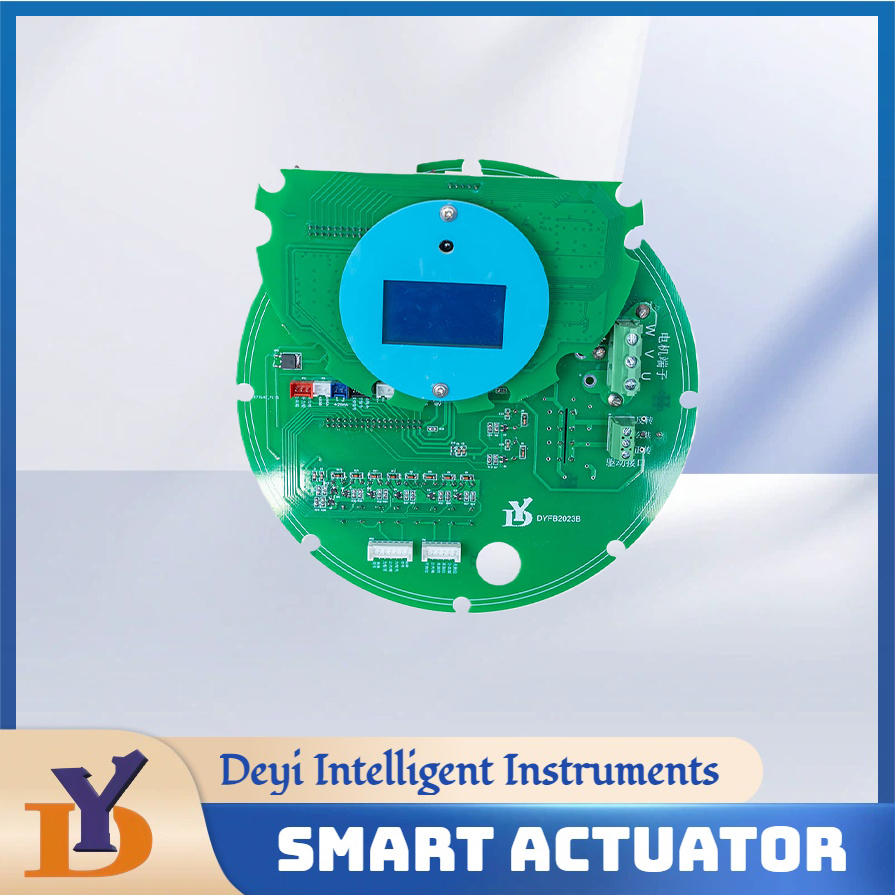
Beyond those five elements, a compliant plate carries the certificate number with its issue level, the ambient range as Ta, an IP rating, CE with the four-digit Notified Body number, and any X condition. DY prints all of them on the DYB series tag for a reason: the missing element is what an inspector photographs.
Two omissions cause most of the trouble. A Ta of −20 to +40°C sold into a site that reaches −30°C, and an IP66 claim on a unit whose cable entries arrived uncertified. Neither shows up until commissioning.
✅ Bottom line: Five elements decide acceptance in this order — protection level, gas group, temperature class, EPL, ambient range.
Yes, and it is routine: IIC is a superset of IIB, which is a superset of IIA. The reverse never holds. Gas group ranks how easily a flame escapes a narrow joint, so a path tight enough to quench a hydrogen flame also quenches an ethylene one.
Groups come from the maximum experimental safe gap (MESG) — the widest gap that still stops a flame for that gas:
A flameproof enclosure holds every joint below the MESG of its group. Machining to 0.29 mm costs more and is harder to hold across a large cover — that is where the IIC premium comes from. Fit a IIB-rated unit in a hydrogen area and the gap is simply too wide; the enclosure will pass flame.
Two items must match the group independently of the main body: the cable entries and stopping plugs, and any Ex-e terminal chamber. An IIC enclosure with IIB glands is a finding at inspection, however good the seal.
Hydrogen is the case that wastes the most money. Its auto-ignition temperature is about 560°C, so T1 — a 450°C surface limit — already clears it. Hydrogen is dangerous because it ignites on a spark at 0.017 mJ, not because it ignites on a warm surface.
| Gas | AIT (°C) | Group | Minimum T class | Note |
| Hydrogen | 560 | IIC | T1 | Usually specified T4 out of habit |
| Methane | 537 | IIA | T1 |
|
| Ethylene | 425 | IIB | T2 | The IIB reference gas |
| Hydrogen sulphide | 270 | IIB | T3 | Drives T3 in sour service |
| Diethyl ether | 175 | IIB | T4 | Typical T4 driver |
| Carbon disulphide | ~90 | IIC | T6 | The classic T6 case |
So what temperature class T4 T5 T6 do I need for hydrogen? Strictly, none of them — T1 satisfies the gas, and specifying T6 buys a derated motor, a bigger housing and a longer lead time for no safety gain. T4 or T6 earns its cost in a mixed area instead: hydrogen alongside a solvent with a low AIT, or a plant that may change feedstock later.
One caveat does bite. The T class is validated at the ambient range on the certificate, and surface temperature climbs with ambient. DY quotes torque derating against ambient for the DYB series rather than a single headline figure, because at 60°C the usable torque is what decides whether the unit still seats the valve.
For an actuator the IIC premium is narrower than for a large junction box: the housing and flame path are usually shared, and the difference sits in joint tolerance and test repetitions, with Group IIC internal ignition tests run ten times under the current standard. Ask any China manufacturer — Rizhao Deyi Intelligent Instrument Co., Ltd. included — to quote both the IIB and the IIC version of the same frame; the gap is normally smaller than the paperwork implies.
If the site handles hydrogen anywhere, in an electrolyser, ammonia plant, fuel cell or hydrotreater, specify IIC once and stop revisiting it. On a pure IIB hydrocarbon site, do not pay for it, and do not let a supplier sell it as extra safety. It changes nothing about your zone compliance.
✅ Bottom line: IIC in a IIB area is safe but usually unnecessary; IIB in an IIC area is a compliance failure.
Q: What temperature class T4 T5 T6 do I need for hydrogen in practice? A: T1 is sufficient, because 450°C sits well below hydrogen's 560°C auto-ignition temperature. The real constraint for hydrogen is the gas group: IIC. Specifying T6 adds cost and lead time without improving safety on a pure hydrogen duty.
Q: My actuators are marked "Ex d IIC T4" with no Gb. Are they non-compliant? A: They remain valid under the certificate they were supplied against and can stay in service. What you should avoid is buying new units with the old marking, or mixing them into a new installation dossier where the EPL is now a required part of the marking.
Q: Can I use an IIC rated actuator in a IIB gas area with IIB cable glands? A: The actuator yes, the glands no. Both must be certified for the same group and for the entry thread listed on the certificate. A IIB gland on an IIC enclosure breaks certification no matter how well it seals, and it is the first thing an Ex inspector checks.
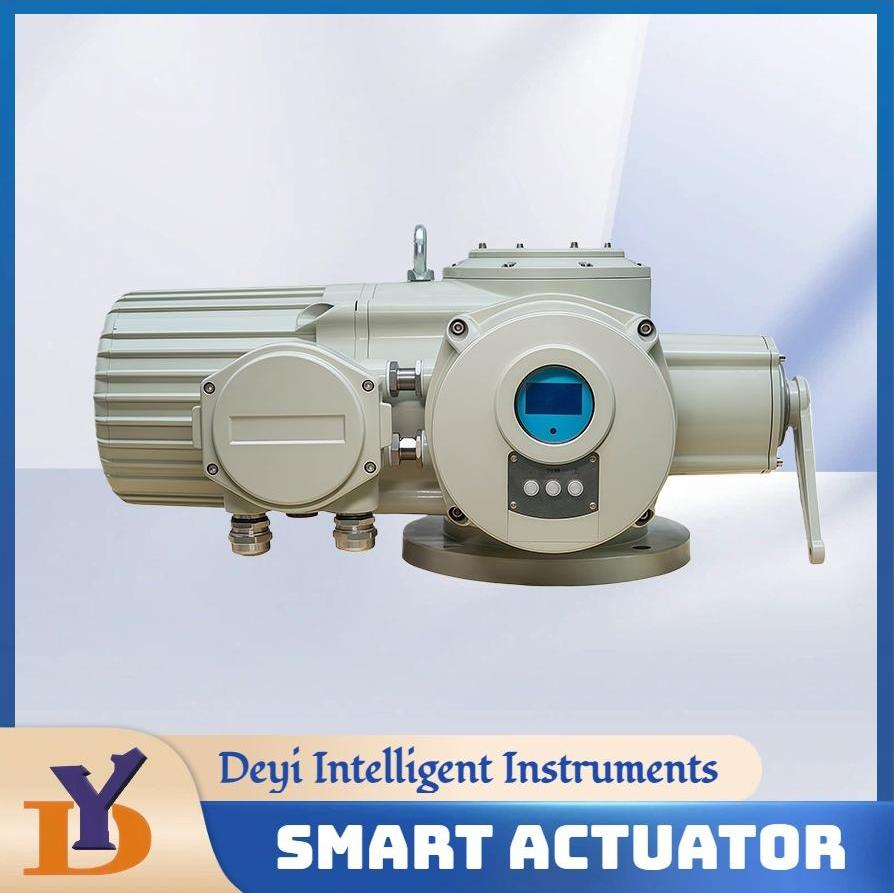
Photograph the tag and send it with the area classification for the valve location — zone, gas group, temperature class and ambient extremes. DY will check the marking against all four and flag the mismatch before the unit ships. DY builds the DYB and DYZB explosion-proof series at its Rizhao plant with OEM and ODM marking options, and every quotation states the marking string you will actually find on the tag. Ask the China factory team which combination your drawing calls for.
|
|
|
| Published: November 2026 | By DY Engineering Team |

November 17, 2026
Email to this supplier
November 17, 2026
Privacy statement: Your privacy is very important to Us. Our company promises not to disclose your personal information to any external company with out your explicit permission.
Fill in more information so that we can get in touch with you faster
Privacy statement: Your privacy is very important to Us. Our company promises not to disclose your personal information to any external company with out your explicit permission.